If you’re considering a career in HVAC (Heating, Ventilation, and Air Conditioning) or refrigeration, you’ve likely heard about an EPA 608 Certification. This essential credential is more than just another certification—it’s a legal requirement for anyone who works with refrigerants in the United States. In this comprehensive guide, we’ll explore what EPA 608 Certification is, why it matters, and what career opportunities it can unlock for you.
Understanding EPA 608 Certification
EPA 608 Certification is a credential issued by the Environmental Protection Agency (EPA) that authorizes technicians to purchase, handle, and work with refrigerants. Established under Section 608 of the Clean Air Act, this certification was created to protect the ozone layer by ensuring that only trained professionals handle refrigerants properly.
The certification program was implemented in response to the discovery that chlorofluorocarbons (CFCs) and other refrigerants were damaging the Earth’s ozone layer. By requiring technicians to be certified, the EPA ensures that refrigerants are handled, recovered, and disposed of in environmentally responsible ways.
Why is EPA 608 Certification Required?
The EPA 608 Certification isn’t optional—it’s a federal law requirement. Here’s why it exists:
Environmental Protection
Refrigerants, when released into the atmosphere, can contribute to ozone depletion and climate change. Proper handling prevents these harmful emissions.
Legal Compliance
Working with refrigerants without proper certification is illegal and can result in significant fines for both technicians and their employers. Violations can cost up to $44,539 per day.
Professional Standards
The certification ensures that all technicians have a baseline knowledge of refrigerant properties, safety procedures, and environmental regulations.
Types of EPA 608 Certifications
EPA 608 Certification comes in four different types, each covering specific equipment and applications:
Type I Certification
Type I covers small appliances containing 5 pounds or less of refrigerant. This includes:
Household refrigerators
Freezers
Window air conditioners
Packaged terminal air conditioners (PTACs)
Dehumidifiers
Type II Certification
Type II covers high-pressure refrigerants in appliances except small appliances and motor vehicle air conditioners. This includes:
Commercial refrigeration equipment
Commercial air conditioning systems
Chillers
Heat pumps
Type III Certification
Type III covers low-pressure refrigerants, primarily found in:
Centrifugal chillers
Large commercial HVAC systems
Universal Certification
Universal Certification is the most comprehensive option, combining Type I, II, and III. This certification allows technicians to work on all types of equipment and is the most sought-after credential in the industry.
What Can You Do With EPA 608 Certification?
EPA 608 Certification opens numerous career opportunities in the HVAC and refrigeration industries:
HVAC Technician
Install, maintain, and repair heating and cooling systems in residential and commercial buildings. This is one of the most common career paths for certified professionals.
Refrigeration Technician
Work on commercial refrigeration systems in restaurants, grocery stores, cold storage facilities, and food processing plants.
HVAC Service Technician
Specialize in troubleshooting and repairing existing systems, responding to service calls, and performing preventive maintenance.
Facilities Maintenance
Many large facilities, hospitals, schools, and commercial buildings employ in-house technicians to maintain their HVAC and refrigeration systems.
Self-Employment
With EPA 608 Certification, you can start your own HVAC or refrigeration business, providing installation, maintenance, and repair services.
Supermarket Refrigeration Specialist
Work specifically on the complex refrigeration systems found in grocery stores and supermarkets.
Industrial Refrigeration Technician
Service large-scale industrial refrigeration systems in manufacturing plants, warehouses, and distribution centers.
How to Get EPA 608 Certified
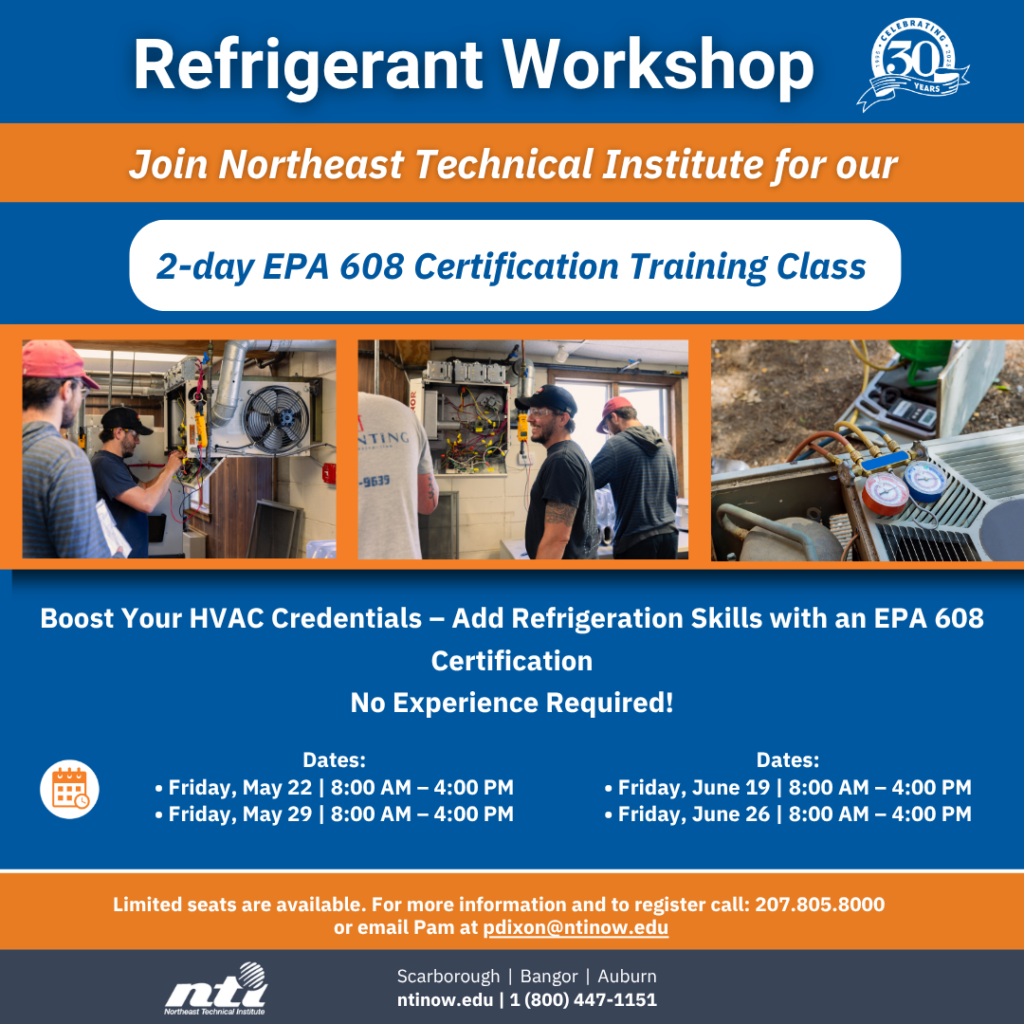
Obtaining your EPA 608 Certification involves several steps—but with the right training, you can complete the process quickly and confidently. At Northeast Technical Institute (NTI), you can prepare for and take this important step in just a 2-day training class.
1. Study the Material
You’ll need to understand EPA regulations, refrigerant properties, recovery techniques, and safety procedures. While self-study is an option, NTI’s 2-day class provides structured, hands-on instruction to help you learn faster and retain more.
2. Choose Your Certification Type
There are four certification types: Type I, II, III, and Universal. Your choice depends on your career goals, but most professionals pursue Universal Certification for maximum job flexibility. NTI’s training helps you understand each type and prepares you accordingly.
3. Take the Exam
The EPA 608 exam includes a core section (required for all certifications) plus individual sections for each type. During NTI’s 2-day class—held over two Fridays from 8:00 AM to 4:00 PM—you’ll be fully prepared for both the core and specialty sections.
4. Pass the Test
To pass, you must score at least 70% on each section. The exam typically includes 25 questions for the core and 25 questions for each certification type. NTI’s focused training is designed to give you the knowledge and confidence needed to succeed.
5. Receive Your Certification
Once you pass, you’ll receive your EPA 608 Certification card—and the best part is, it never expires. This credential is essential for working with refrigerants and advancing in the HVAC industry.
Key Topics Covered in the EPA 608 Exam
To prepare effectively, you should understand these core topics:
Ozone Depletion: Understanding how refrigerants affect the ozone layer
Clean Air Act: Federal regulations governing refrigerant use
Refrigerant Recovery: Proper techniques for removing refrigerants from systems
Recycling and Reclamation: Processing refrigerants for reuse
Leak Detection: Methods for identifying refrigerant leaks
Safety Procedures: Proper handling and storage of refrigerants
Equipment Requirements: Tools and equipment needed for refrigerant work
Record Keeping: Documentation requirements for refrigerant transactions
Career Outlook and Salary Expectations
The HVAC and refrigeration industry offers strong career prospects:
Job Growth: The Bureau of Labor Statistics projects steady growth in HVAC careers
Median Salary: HVAC technicians earn competitive wages, with experienced professionals and those with additional certifications earning significantly more
Job Security: HVAC and refrigeration systems require ongoing maintenance, providing stable employment
Advancement Opportunities: With experience and additional certifications, you can advance to supervisory roles, specialized positions, or business ownership
Additional Certifications to Consider
While EPA 608 is essential, consider these complementary certifications to enhance your career:
EPA 609 Certification: Required for working on motor vehicle air conditioning systems
NATE Certification: North American Technician Excellence certification demonstrates advanced technical knowledge
HVAC Excellence Certification: Industry-recognized credential for HVAC professionals
Manufacturer-Specific Certifications: Training on specific brands and equipment types
Conclusion
EPA 608 Certification is your gateway to a rewarding career in the HVAC and refrigeration industry. This federally mandated credential not only ensures you’re working legally but also demonstrates your commitment to environmental protection and professional standards. Whether you’re just starting your career or looking to formalize your existing skills, obtaining EPA 608 Certification is an essential step toward success in this growing field.
The certification never expires, provides nationwide recognition, and opens doors to diverse career opportunities with competitive salaries. With the ongoing need for climate control and refrigeration in residential, commercial, and industrial settings, EPA 608 certified technicians will continue to be in high demand for years to come.
Ready to start your journey? Begin studying today and take the first step toward a stable, rewarding career in HVAC and refrigeration.